5.0 1,200+ Reviews Call The Office (616) 312-1900 Book Online
Book Online Services Why KODA Service Area FAQ

HomeLaminate

Laminate Floor Cleaning

Laminate is a printed layer under a clear wear coat, and water at the seams is the one thing that ruins it. We clean it with almost none, so the planks never swell at the edges and the finish comes back without a film on it.

  • Almost No Water Used
  • Seams & Plank Edges Kept Dry
  • Cleaner Build-Up & Dulling Film
  • Click-Lock & Floating Systems
  • Kitchens, Halls, & Living Areas
  • Dry In Minutes, Not Hours
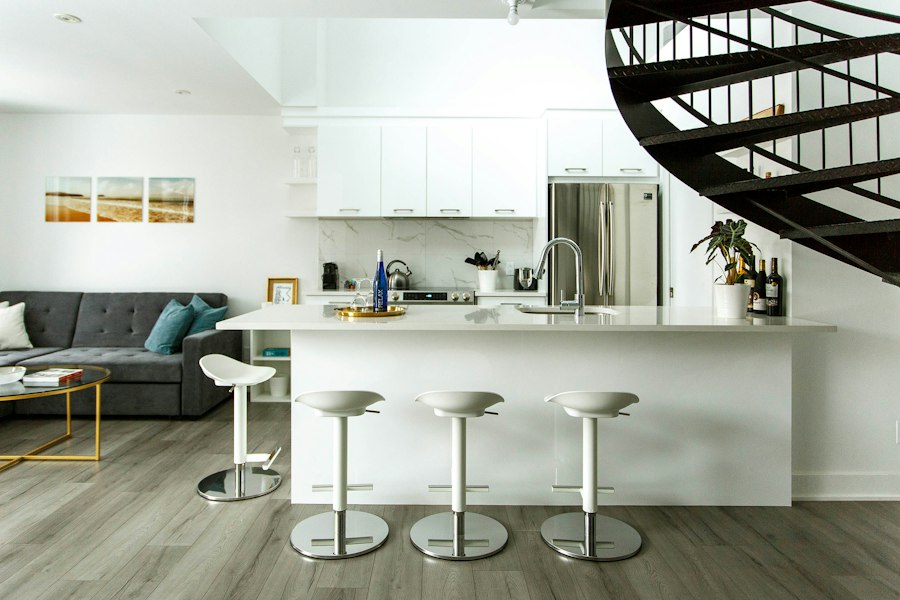
A kitchen with a pale laminate plank floor

Laminate Floor Cleaning Across Holland and Grand Rapids

KODA Carpet Cleaning · 100 S. Waverly, Ste 103, Holland, MI 49423
(616) 312-1900 · info@kodacarpetcleaning.com

Laminate Questions, Answered

What West Michigan homeowners ask us most about laminate floors.

Can laminate floors be professionally cleaned?

Yes, and the difference is usually obvious. What dulls a laminate floor is rarely dirt on the surface; it is the residue left behind by household floor cleaners, which dries into a film that then holds onto the next round of dirt. A professional clean removes that film rather than adding another coat of it, and it does so with far less water than a mop puts down.

Will cleaning ruin my laminate floor?

Not the way we do it. Laminate is damaged by standing water, not by cleaning, so the whole method is built around keeping moisture off the seams. Solution goes on in a controlled amount, the floor is agitated, and it comes straight back up. Nothing is ever left to sit and soak in.

Can you steam clean laminate?

No, and nobody should. A steam mop forces hot vapor down into the joints between planks, and the core underneath is fiberboard, which swells when it gets wet and never goes back. That swelling shows up as raised, chipped edges months later, long after the mop has stopped being the obvious suspect.

What is the difference between laminate and LVP cleaning?

The methods overlap and the risks do not. Laminate has a fiberboard core that swells irreversibly if water gets through the seams. LVP is genuinely water-resistant, but it has a clear wear layer that harsh chemicals and heat will permanently dull. Both get a low-moisture treatment, with different chemistry. If you are not sure which you have, we will tell you when we arrive.

My laminate looks cloudy. Can that be fixed?

Almost always, because cloudiness on laminate is build-up rather than damage. Years of mop-and-shine products leave a haze that gets worse each time more is applied. Stripping that residue back takes the floor to the finish it actually has, which is usually a good deal better than the one you have been looking at.

How long does laminate take to dry?

Minutes. There is no backing, pad, or grout holding water, and the process puts very little down to begin with, so the floor is walkable almost as soon as we have finished a room.